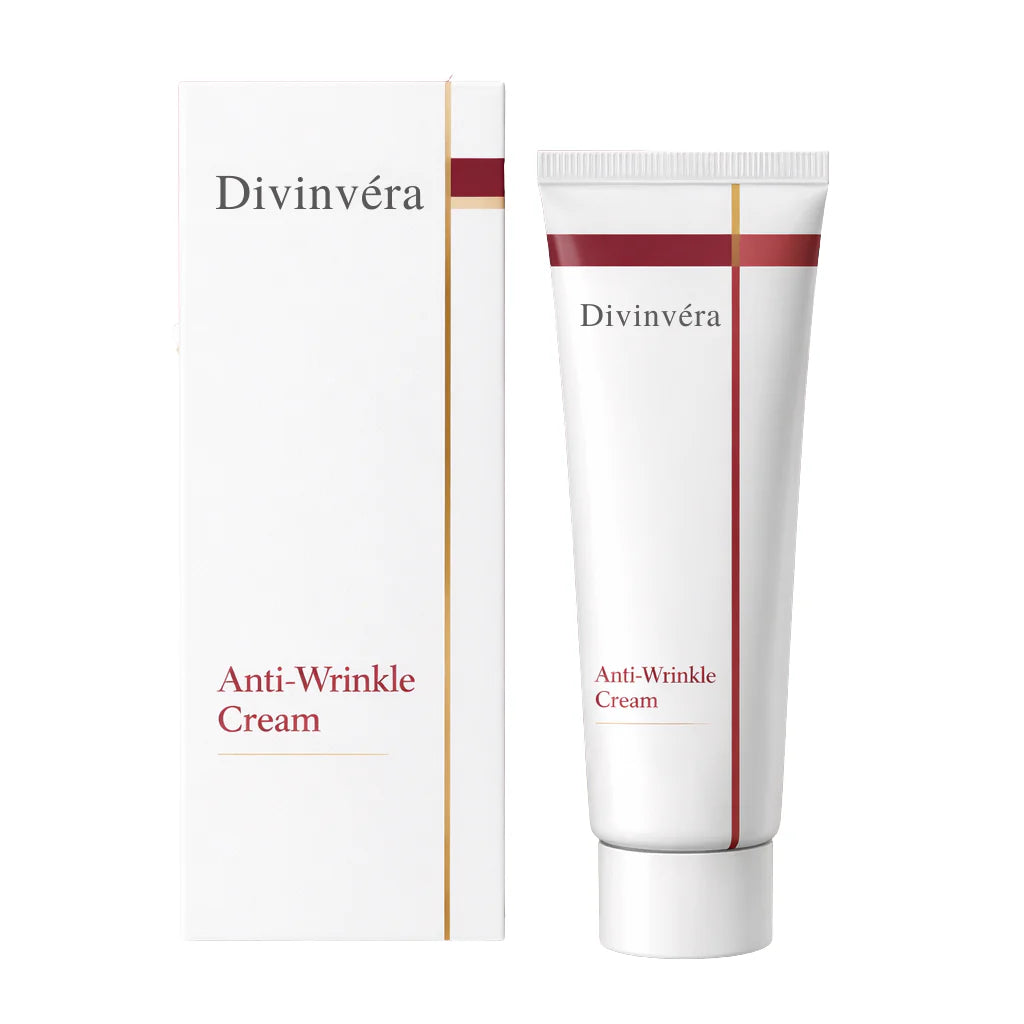
Is Your "Anti-Aging" Cream Actually Killing Your Marriage?
Is Your "Anti-Aging" Cream Actually Killing Your Marriage?
- Made in USA
- Handmade with Love
Couldn't load pickup availability
30-Day Guarantee — Love the smoother look or get a full refund

The Beauty Industry Lie That’s Been Repeated for 2,000 Years
For years, women have been told that the heavier a night cream feels, the more effective it must be. But a thick, rich layer sitting on your skin doesn’t automatically mean better results.
The truth is simpler: many dense creams are still based on an old idea—creating a surface barrier , not improving skin at its source.
The Grease Mask: How an Ancient Wound Balm Became Modern Skincare
In 150 AD, the Roman physician Galen created “cold cream” to seal wounds by forming a protective layer. Thousands of years later, many modern creams still rely on the same approach: occlusion , sealing the surface instead of absorbing deeply.
That’s why traditional creams can feel rich but often sit on top of the skin—leaving a waxy film and offering limited deep-level support.

The Horror Story You're Living (And Didn’t Know Was The Cream’s Fault)
From thousands of conversations with women like you, we keep hearing the same pattern:
“He wouldn’t kiss me… he won’t tell me he loves me.”
“I can’t be intimate with all that goop on my face.”
“I’ll sacrifice my skin for sex.”
You thought he was pulling away because you were aging. But it’s not that.
It’s the texture . The sticky “wall of wax” created by creams that sit on top of your skin.
You were pushed into an impossible choice: protect your skin or feel close again.
And the cruel part? Products meant to make you feel attractive can end up making you feel untouchable.
The Horror Story You're Living (And Didn’t Know Was The Cream’s Fault)
From thousands of conversations with women like you, we keep hearing the same pattern:
“He wouldn’t kiss me… he won’t tell me he loves me.”
“I can’t be intimate with all that goop on my face.”
“I’ll sacrifice my skin for sex.”
You thought he was pulling away because you were aging. But it’s not that.
It’s the texture . The sticky “wall of wax” created by creams that sit on top of your skin.
You were pushed into an impossible choice: protect your skin or feel close again.
And the cruel part? Products meant to make you feel attractive can end up making you feel untouchable.
But There’s More. It Gets Worse.
By midday, your face has become an "orange zebra."
The oils in your cream—sitting on top of your skin—interact with your makeup pigments and oxidize. Your foundation separates. Your concealer streaks. You check the mirror at lunch and barely recognize yourself.
When you hug a colleague or friend, you leave a beige smear on their shoulder. The embarrassment is crushing.
At night, the grease migrates. It ruins expensive silk pillowcases. It traps baby hairs against your forehead. You wake up feeling less like a woman and more like you've been sealed in plastic wrap.
And none of this is your fault.
The cream was never designed for skin. It was designed for wounds.
Here's What the Industry Doesn't Want You To Know
Before Galen, ancient cultures understood something the modern beauty industry has forgotten.
Cleopatra didn't use wax. She used milk (lactic acid) and oils (Moringa, Sesame) that absorbed deeply into her skin.
Ancient Ayurvedic medicine used biocompatible oils that actually penetrated the dermis.
These worked because they were designed for skin, not for sealing battle wounds.
But in the 1950s, petrochemical companies needed to offload mineral oil (petrolatum—literally processed crude oil). The beauty industry jumped at the opportunity. Mineral oil is cheap. It's stable. It creates the illusion of "richness" because it sits on top and feels heavy.
So, they replaced Cleopatra's ancient wisdom with Galen's mistake.
And for 70 years, they've convinced you that thick = effective.
They were wrong.
Why Traditional Creams Don’t Truly Penetrate
Conventional creams contain oil droplets that are too large to pass through the skin barrier (the stratum corneum). Instead of penetrating, they remain on the surface, forming a film that can clog pores, interfere with makeup, and leave a greasy residue.
They feel rich, but they stay on top.
How Nano-Emulsion Technology Changes Everything
Divinvéra uses proprietary high-shear technology to break oil droplets into nano-scale particles—hundreds of times smaller than those in traditional emulsions.
These ultra-fine particles are small enough to move between skin cells, delivering hydration and active anti-aging ingredients deep into the dermis, where collagen production and real repair occur.
The result is measurable absorption in 0.5 seconds.
Not minutes. Not hours. Seconds.
The formula disappears into the skin, leaving no film, no residue, and no barrier between you and the person touching your face. What remains is treatment without heaviness—performance without the grease mask.
The Three Eras of Skincare Technolog
What Happens When A Product Actually Absorbs?
When we tested Divinvéra with women who'd been using traditional creams for decades, the responses were always the same:
"It's like my skin is drinking it up."
"It just vanishes."
"I can't feel it at all—but I can feel the results."
This is the opposite of every heavy cream you've ever used. With Divinvéra, the moment you apply it, it's gone. Your skin is matte. It's soft. It's ready to be touched.
Clinical Results: The 0.5 Second Test
In a 12-week study of 142 women aged 45-68:
- 94% experienced visible reduction in fine lines and wrinkles (compared to 23% with traditional creams)
- 89% reported their makeup no longer oxidized or separated by midday
- 87% said they felt comfortable being intimate without washing their face first
- 0% experienced pilling, tackiness, or residue
- 98% said they would recommend it (vs. 34% with their previous cream)
The Critical Metric: Absorption Rate
Traditional creams: 12-18% bioavailable after 8 hours
Nano-emulsion: 78% bioavailable after 0.5 seconds
Translation: You get effective anti-aging without the "grease mask.